misuseIn brief · · · Written with AI
An 80,000 Hours episode lays out a "low-tech" plan against engineered pandemics
Open Philanthropy's Andrew Snyder-Beattie argues that guarding against the worst biological catastrophes is more achievable than commonly thought. The episode dates from October 2025.
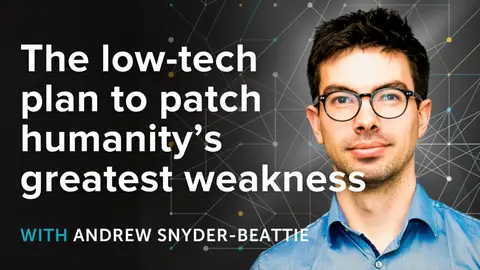
On 2 October 2025, the 80,000 Hours podcast published an interview in which Rob Wiblin talks to Andrew Snyder-Beattie, whom it introduces as the head of Open Philanthropy's biosecurity programme. Snyder-Beattie argues that defending against the worst biological catastrophes is more achievable than people usually think.
The plan has "four pillars": a barrier between the virus and the lungs; biological hardening of buildings; immediate detection of a pandemic; and a cure. According to the host, the programme believes it could cut these risks by at least half.
The conversation also touches on AI: the guest says a system might gamble on biological weapons, and that response measures like these could help deter that. These are the guest's and the programme's views. We have read only the opening of the transcript.
Sources
Written by AI from these sources.
- Andrew Snyder-Beattie on the low-tech plan to patch humanity's greatest weakness: engineered biological catastrophes (#224)Accessed 21 October 2026 · Image: 80,000 Hours